AI-Powered QR Codes: The Future of Customer Engagement
Discover how artificial intelligence is transforming QR codes into smart, personalized tools that predict user behavior and optimize marketing campaigns automatically.
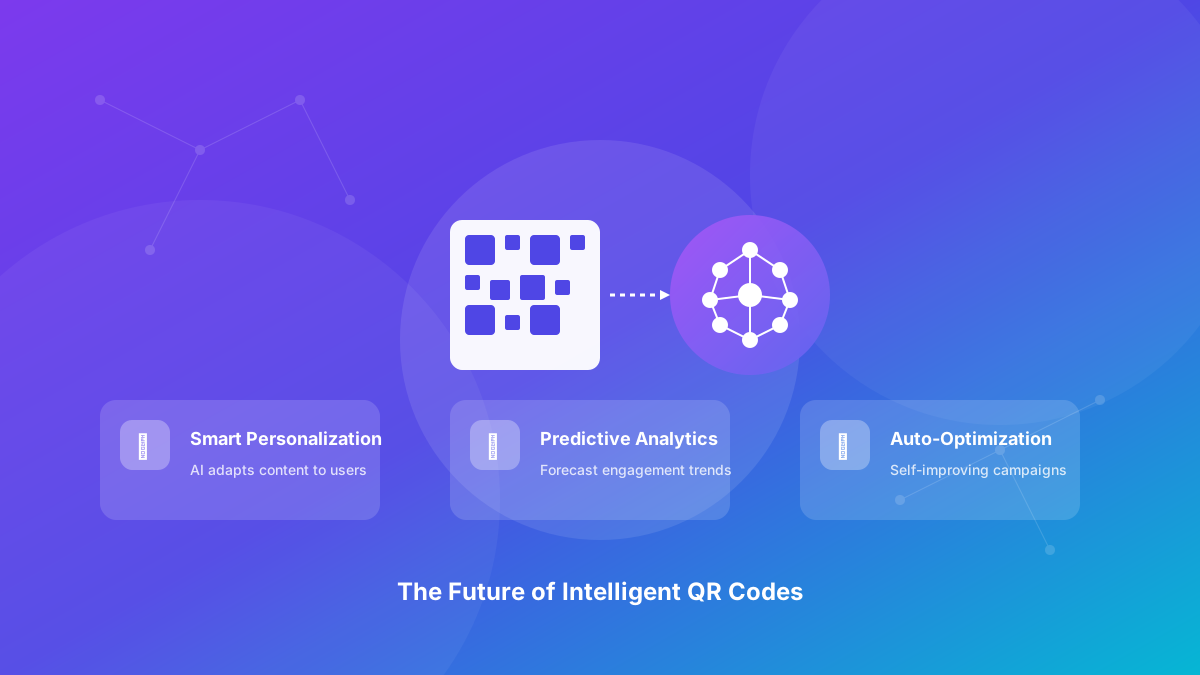
The convergence of artificial intelligence and QR code technology is creating a new paradigm in customer engagement. AI-powered QR codes go beyond simple URL redirection—they learn, adapt, and personalize experiences in real-time, making every scan more valuable than the last.
In this guide, we explore how AI is revolutionizing QR codes and what this means for businesses looking to stay ahead in 2026.
What Are AI-Powered QR Codes?
AI-powered QR codes combine traditional QR technology with machine learning algorithms to create intelligent, adaptive experiences. In 2026, we have moved beyond the "black box" squares into the era of Generative Artistic QR Codes and Predictive Content Delivery. Instead of simply linking to a static URL, these smart codes can:
- Personalize content based on user behavior and preferences
- Optimize landing pages in real-time based on conversion data
- Predict the best content to show each individual scanner using edge-AI
- Generate custom QR code designs that look like professional oil paintings or digital art
- Automatically A/B test different experiences without human intervention
The 2026 Breakthrough:
The integration of Stable Diffusion with ControlNet has allowed QR codes to be embedded directly into photorealistic images. This has increased user engagement rates by up to 200% compared to traditional "robotic" patterns.
The Rise of Artistic AI QR Codes
Historically, QR codes were functional but aesthetically disruptive. AI has changed this. By using ControlNet models (specifically Tile and QR Code Monster models), generative AI can "paint" a QR code into a scenic landscape, a character's clothing, or a product's silhouette.
The technical challenge is maintaining a "scannable" contrast ratio. AI-powered generators now use Iterative Scannability Scoring. As the image is being generated, a machine learning model "scans" the work-in-progress thousands of times per second, adjusting the light and shadow of individual pixels to ensure that while it looks like a cloud or a leaf, it still functions as a valid byte-matrix for a mobile sensor.
Key AI Features in Modern QR Technology
1. Intelligent Dynamic Personalization
AI algorithms analyze scan patterns, device information, time of day, and environmental triggers to serve personalized content. A luxury hotel QR code might perform a Contextual Handover:
- Morning (Cold Weather): Shows the spa's hot stone massage menu.
- Afternoon (High Humidity): Shows the pool-side cold drink service.
- Evening (Known Gourmet Profile): Shows the chef's tasting menu at the Michelin-star restaurant.
- Repeat Guests: Automatically prefills check-in data and offers "welcome back" loyalty credits.
2. Predictive Analytics & ML Modeling
Machine learning models analyze historical scan data to predict future engagement hotspots. This isn't just counting scans; it's Flow Analytics:
- Saturation Prediction: AI warns you if a QR placement is reaching "Decision Fatigue" (scans dropping despite high traffic).
- Geographic Heatmapping: Identify which physical locations (bus stops vs. billboards) drive the highest LTV (Lifetime Value) users.
- Conversion Propensity: By analyzing the speed of a scan and the device type, AI can score a lead before they even land on your page.
3. Natural Language Processing (Post-Scan Voice)
In 2026, scanning is often just the start of a conversation. AI-powered QR codes integrated with LLMs (Large Language Models) allow for "Talk-to-Scan":
- A customer scans a product QR code and simply says "Does this contain nuts?" The AI reads the live inventory/ingredient data and answers instantly.
- Multi-language support with real-time audio translation for tourists scanning museum exhibits.
How AI Enhances QR Code Marketing
Autonomous Multivariate Testing
Traditional A/B testing is slow. AI QR campaigns use Multi-Armed Bandit (MAB) algorithms to test 100+ different landing page variations simultaneously. The AI redirects traffic to the winning variant in real-time, significantly reducing "waste" on low-perfoming creative assets.
Hyper-Local Seasonal Adjustments
AI can connect your QR codes to local weather APIs and news feeds. A retail QR code on a window display can automatically switch from "Sunscreen Deals" to "Umbrella Discounts" as soon as the local weather station reports rain—without a marketer touching a button.
Industry Applications: 2026 Case Studies
The "Visual Stealth" Campaign (Luxury Retail)
A high-end fashion brand embedded QR codes into the patterns of a limited-edition scarf line. The codes were invisible to the naked eye but scannable by smart glasses and high-end phone cameras, leading to an exclusive "Inner Circle" digital lounge. This used High-Frequency AI Watermarking, a subset of QR technology.
Smart Supply Chains (Pharma & Manufacturing)
In healthcare, AI-powered QR codes on medication bottles don't just show instructions. They connect to the patient's smart-watch data. If the user scans the code but the watch detects they haven't slept or have a high heart rate, the AI can provide custom safety warnings or auto-call the pharmacy for a consultation.
Getting Started with AI-Enhanced QR Codes
Step 1: Preparation of Visual Assets
Before using generative AI, you need high-quality source images. If you are creating an artistic QR code for a product, use our AI Background Remover to isolate your product. This ensures the generative model "understands" the focal point of your design.
Step 2: Choosing a Secure Foundation
Any AI strategy is only as good as its base. Use a generator that supports High Error Correction (Level H). Our Free QR Code Generator provides the high-density byte arrays needed to maintain scannability even when you are adding artistic AI overlays later in the process.
Step 3: Integrating the Feedback Loop
Connect your QR scan data to a tool like Google Analytics 4 or a custom ML pipeline. Look for:
- Scan Latency: How long does it take the camera to "lock on" to your artistic code?
- Friction Points: Where do users drop off in the AI-driven personalization flow?
The Future: Neural Scans and Beyond
As we look toward 2027, the focus is shifting to Neural Scams—using human eye tracking (via front-facing cameras) to optimize where a QR code is placed on a page or physical poster. AI will essentially "tell" you where people are looking and move the code's digital twin to that exact spot for maximum scan probability.
Join the AI Revolution
Step into the future of trackable marketing. Link your AI-ready QR strategy with our high-density generator today.
Popular Image Tools
Ready to optimize your images?
Try SnapResizer's free tools today. Secure, fast, and private browser-based processing without the wait.